Conference Program
Please note that certain conference days are dedicated to specific thematic tracks. Participants are kindly asked to take these thematic focuses into account when registering for individual days, in order to ensure alignment with their professional interests and areas of expertise.
Comprehensive information regarding the themes for each day is available in the official conference program.
MAY 22
Wrocław, Poland (University of Wrocław)
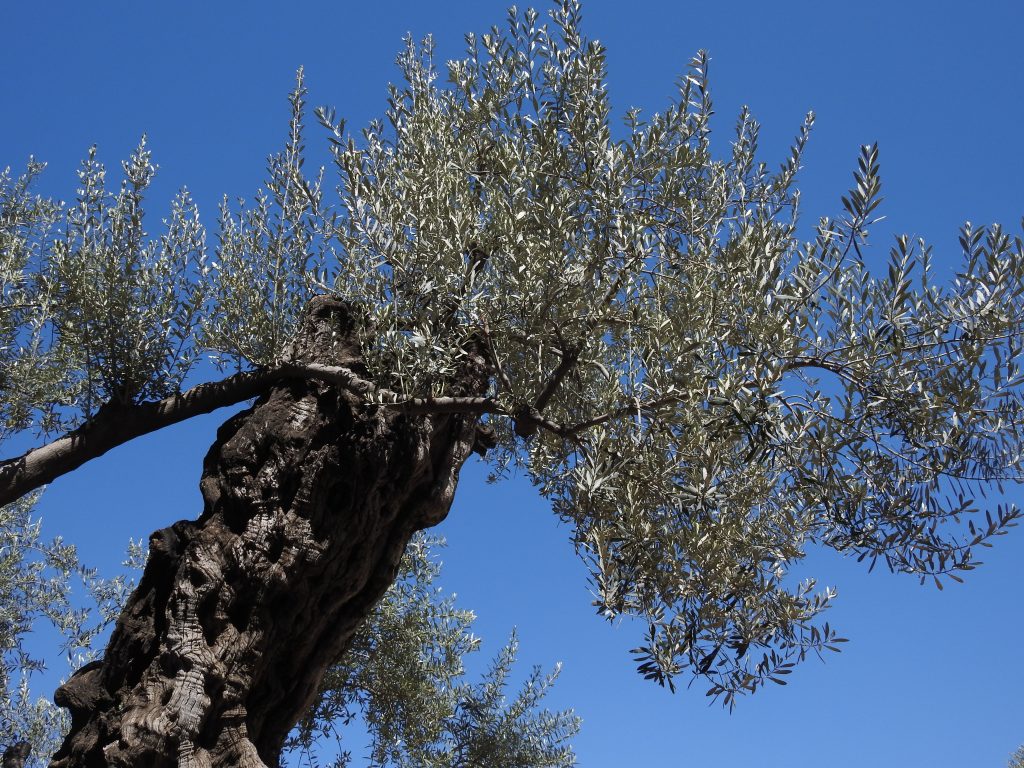
BIO SPACE NEXUS – Bridging Natural Systems and Scientific Innovation
The Young Scholars Conference – BEYOND LANGUAGE 2026 – for the first time invites scientists from biological, medical, and experimental sciences!
The BL 2026 Conference is thought to provide a forum for discussion on current research problems and challenges in contemporary biology, medicine and experimental sciences in all their dimensions, covering a wide range of topics, including also the following areas:
– organismal biology (microbiology, botany, zoology, human biology, paleobiology),
– medical and forensic biology (genetics, immunology, oncogenesis, biocriminalistics),
– molecular biology (cell biology, biochemistry, physiology, neurobiology),
– environmental biology (ecology, environmental protection, biodiversity, evolutionism),
– biological and medical chemistry.
The conference aims to familiarize young scientists with current trends in science and provide an opportunity to present the results of contemporary research. Our conference is an excellent opportunity to exchange experiences, views, knowledge, and promoting a modern approach to research.
We welcome both individual students and student research groups!
JUNE 15
Sosnowiec, Poland (University of Silesia in Katowice)
Korean Day
We are pleased to announce that the BEYOND LANGUAGE 2026 Conference held on June 15, 2026 at the University of Silesia is dedicated to Korean Studies focusing on three key areas:
1) Korean linguistics and translation studies,
2) linguistic and sociocultural dynamics on the Korean Peninsula,
3) Korean literature and popular culture.
“This year’s conference holds particular significance, as it both marks the inaugural hosting of the Beyond Language Conference at the University of Silesia and celebrates the opening of the newly established degree programme in Korean Studies at our University”.
JUNE 17
Kraków, Poland (Jagiellonian University in Kraków)
Language and Its Contexts – Methods of Inquiry and Research Fields
The Kraków conference day will take place at the Faculty of Polish Studies of the Jagiellonian University and will focus on language in its diverse contexts: cognitive, cultural, social, media-related, political, and others.
Contemporary linguistic research is moving away from the analysis of abstract units of the language system and returning to the study of utterances in their natural contexts of use. The inherent multimodality of human communication replaces the elegant yet, from the perspective of the humanities, inadequate study of units isolated from the multifaceted domain of linguistic usage.
The aim of the conference is to present the opportunities opened up by such an interdisciplinary reorientation of the linguistic paradigm—one that redefines the field of inquiry. We invite submissions addressing, among other topics:
– innovative methods of investigating language within various contextual frameworks,
– examples of analyses of linguistic and multimodal utterances embedded in diverse contexts,
– reflections on interdisciplinary relations between linguistics and other academic fields and disciplines.
We also welcome proposals devoted to other issues within linguistics and communication studies. Papers may be submitted in either Polish or English.
June 19
Łódź, Poland (University of Lodz)
Disinformation Discourse
The Łódź session is organized by the Department of Pragmatics, University of Łódź. Disinformation discourse consists in the deliberate practice of disseminating false information with the intention to deceive. Originating from random fake news spread online by individuals, nowadays it comprises all kinds of content of public interest, importance or urgency, from healthcare to environment to war, communicated by organized groups sponsored by various public-political or commercial principals. Using sophisticated techniques of propaganda and threat generation, disinformation discourse is difficult to counter, as it draws on the current construction of societies, their anxieties and fears, craftily exploiting cases of public distrust in officially circulated information.
This thematic session invites papers that explore disinformation discourse in terms of:
a) its conceptual underpinnings and linguistic structure;
b) the public, political, and media domains in which it mostly often occurs and which it is likely to colonize in the future;
c) methods in which can be efficiently researched and described.
The desired outcome of the presentations and discussions in the session is to:
– produce a comprehensive, cutting-edge account of the concept, origins, evolution and current domains of disinformation discourse;
– relate the phenomenon of disinformation discourse to central, urgent problems of modern societies, such as authority crisis, public anxiety, and growing distrust in official news content;
– outline interdisciplinary ways of researching disinformation discourse across its many domains and discursive manifestations, from healthcare, environment, and modern technology, to international conflict and war propaganda.
JUNE 26–27
Vienna, Austria (University of Vienna)
Theological, Philosophical, and Epistemological Perspectives on Linguistic Diversity, Cultural Identity, and Minority Communities
The Vienna seminar foregrounds: Theological, Philosophical, and Epistemological Perspectives on Linguistic Diversity, Cultural Identity, and Minority Communities integrating the mission of Beyond Language 2026 with the academic profile of VDTR.
Theology
– religious and liturgical languages; multilingual worship and diaspora communities;
– language as a medium of faith, memory, and lived religious identities.
Philology & Linguistics
– minority and endangered languages; textual and oral traditions;
– translation and interpretation; linguistic heritage, contact, and revitalization.
Philosophy, Philosophy of Religion & Epistemology (Analytic & Continental Perspectives)
– religious meaning and understanding; interpretation and experience across languages;
testimony, authority, credibility; epistemic (in)justice and the socio-political power of language.